Constructing Qubit Channels with Arbitrary Fixed Points
A Banach fixed-point view of qubit channels: a rotated mixture of depolarizing and amplitude damping that drives any initial state to any chosen target state.
Read more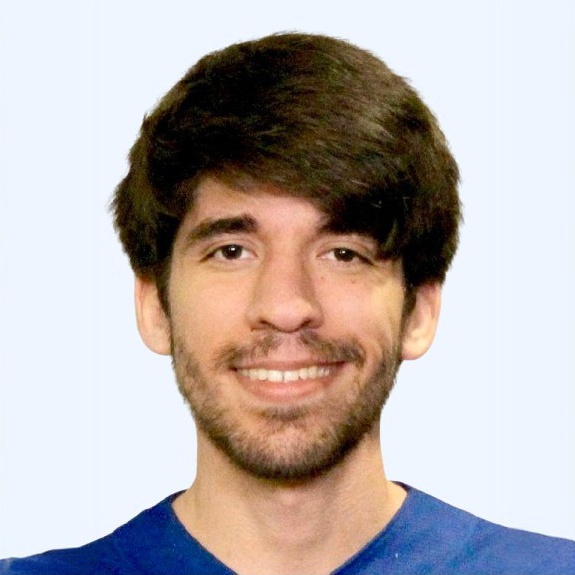
Quantum Information
University of Waterloo
I am a Master's student at the University of Waterloo and a researcher at the Institute for Quantum Computing, under the supervision of Prof. Graeme Smith. My research focuses on quantum error correction under non-Markovian noise. Using the process tensor framework, I study how QEC codes interact with temporally correlated errors and whether error correction can effectively suppress or Markovianize the noise process.
Papers, thesis, and selected course projects
arXiv:2610.03545 [quant-ph], October 2026
What must a quantum error-correction decoder know about temporally correlated noise, and what does it cost to learn? We study this question for fixed stabilizer memory experiments with known system-environment interactions. We formulate calibration in terms of the fidelity differences that select a Pauli recovery and relate missing information to the resulting fidelity loss. Our main example uses weak coherent X rotations in a class of CSS codes including Shor, Steane, and odd-distance rotated surface codes. All physical qubits share a sign either fixed throughout a run or independently redrawn each interval. The two models have identical syndrome statistics and the same spatiotemporal Pauli process (SPP), obtained by Pauli-twirling every noise interval. Yet at suitable storage times, they require different logical corrections. In the weak-noise limit, each model is almost perfectly correctable when known. Without model information, even the best final recovery has a worst-case fidelity loss approaching 1/2 relative to the noise-aware optimum, despite access to the full syndrome record. For this pair of models, at fixed code and fixed positive target loss below 1/2, we prove matching calibration bounds. With logical preparation and final readout, complete QEC cycles require a number of noise intervals scaling as the inverse rotation angle raised to the code's X distance. Allowing two uninterrupted intervals before one extraction reduces the optimal cost to inverse-square scaling. Physical Pauli twirling of every noise interval changes both recovery performance and its information requirements. Discarding the record of applied random Pauli operations makes the SPP sufficient for optimal recovery. Keeping this record can improve the attainable fidelity, but reaching that optimum may require additional noise information.
Theory of Quantum Information — Final Project, University of Waterloo, Fall 2025
Cycle benchmarking is a scalable protocol used to measure the error rate of a specific cycle of quantum gates implemented in parallel. We will introduce the cycle benchmarking protocol, explain how it works, and numerically illustrate its effectiveness. We demonstrate that relaxing the assumptions required to accurately estimate the process fidelity can lead to inaccurate results; in particular, allowing gate-dependent noise on the twirling gates can cause a misestimation of the process fidelity. However, we also show that highly gate-dependent errors can still yield accurate results in certain regimes. Finally, when the gate-independent condition is relaxed, we show that it is possible to reconcile the estimated and theoretical fidelities by measuring in a different basis via a unitary transformation which depends on both the chosen error model on the twirling gates and the targeted gateset.
PHYS 437B — Undergraduate Thesis, University of Waterloo, Winter 2025
In this project, we will illustrate the theoretical concept of circuit benchmarking, an efficient and scalable protocol to “lower bound” the process fidelity of a circuit. Finding a lower bound to the process fidelity is crucial because it tells us what is the worst-case error rate in our quantum circuit. We will exhaustively run simulations on quantum circuits with different error models and error strengths to measure the closeness of the theoretical bound imposed by the circuit benchmarking theory with respect to the actual process fidelity. We will find that in several cases there is a minimal or zero gap, and thus not only we have found a lower bound, but rather a good approximation to the process fidelity.
Open Quantum Systems — Final Project, University of Waterloo, Spring 2024
We introduce the concept of superoperators, which are mathematical constructs used to describe the evolution of quantum states. We will focus on completely positive and trace-preserving maps, which are essential in quantum information theory as they represent the most general form of physical quantum operations. Next, we delve into different representations of superoperators. We define each of these representations in detail and prove several theorems that demonstrate their importance. Then, we prove that all the different representations of a superoperator are equivalent. This equivalence is important because it allows us to convert between representations with ease, depending on which one is more convenient for the problem at hand. Consequently, we analyze the properties of these representations when we add the restrictions that the superoperators are trace-preserving and/or completely positive. Finally, we visualize specific quantum channels using these representations. This analysis provides a new perspective on how the representations depict the channels and allows us to examine their properties in greater detail.
Personal notes on quantum information.
A Banach fixed-point view of qubit channels: a rotated mixture of depolarizing and amplitude damping that drives any initial state to any chosen target state.
Read moreA scalable, SPAM-robust protocol for estimating the process fidelity of a fixed cycle of parallel gates via randomized compiling and Pauli twirling.
Read moreFeel free to reach out — I'm open to questions about my research, collaboration proposals, and job or research opportunities.
QNC 4203
Quantum Nano Centre
University of Waterloo
Waterloo, ON, Canada